
April 25: why Liberation still matters
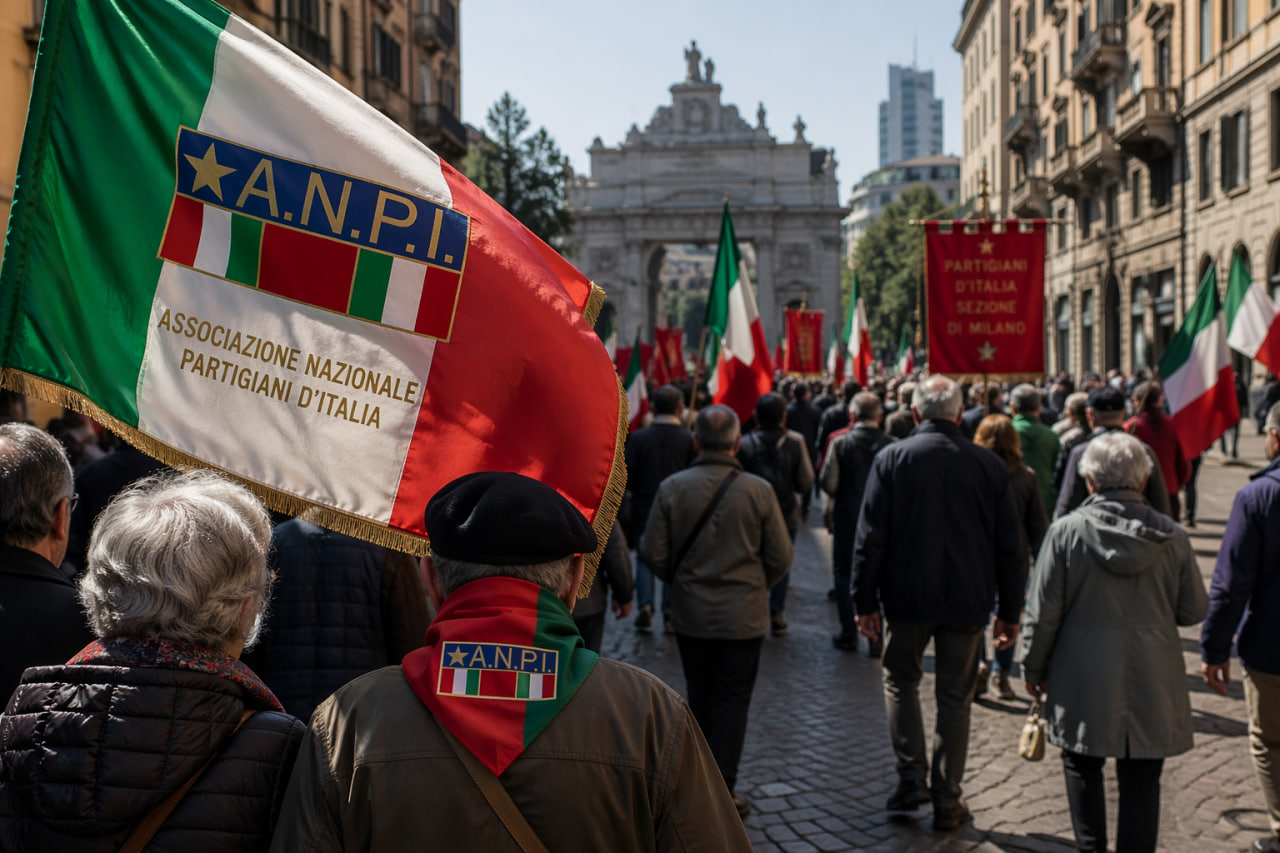
April 25 remembers the end of Nazi-Fascism and the living bond between Resistance, Constitution and democracy in our present.
It might look, at first glance, like one of those dates that survive out of habit. A flag, a speech, a few songs carried through a square and then folded away until the following year. Yet April 25 does not quite behave like that. It resists reduction.
In Italy, Liberation Day marks the collapse of a regime that had turned obedience into a daily exercise. Not only a dictatorship of uniforms and slogans, but a system that trained people to accept hierarchy as nature, silence as prudence, fear as method. The end came in 1945, with the partisan insurrection spreading across Northern Cities (Insurrection of April 25, 1945) and with it the slow return of breath to public life.
Italy later recognized April 25 as a national Holiday (Italian law establishing Liberation Day). The date remains anchored not only in history, but in the structure of the Republic itself.
The Resistance as a civic fracture
For an anglophone reader, the instinct is often to translate April 25 into something familiar. A victory day. A national anniversary. The translation works only partially.
Italy’s Liberation does not celebrate a single army or a clean military triumph. It recalls a fracture inside the country itself: civilians, workers, students, soldiers who stepped out of line and refused the script they had been given.
This difference matters. The Resistance did not simply end a regime. It forced a question: what kind of country comes after such a rupture?
The Italian Constitution carries that question in its language. Dignity before power. Limits to authority. Space for dissent. Not abstract principles, but traces of a historical experience that made obedience visible for what it was.
Memory that still moves
Walk through an Italian town on April 25 and the meaning appears in fragments.
A worn banner carried by hands that have held it for decade. A name read aloud that interrupts the rhythm of the ceremony. A younger face, uncertain, trying to understand the tone.
The scene explains more than any speech. Memory here is not fixed. It moves.
This is also why the date still generates unease. It is not a neutral memory. It carries a position, a direction, a judgment embedded in the story itself.
What anglophone readers often miss
Seen from outside, April 25 risks being reduced to a historical marker. Something concluded.
Inside Italy, it behaves differently. It continues to act as a reference point. A way of measuring the present against a moment when the direction of a country changed abruptly.
This is where it becomes legible beyond Italy.
It is not simply about what happened in 1945. It is about how a society remembers the conditions that made authoritarianism possible, and whether those conditions have truly disappeared or simply adapted.
Power, language and quiet continuities
Some mechanisms do not vanish. They shift tone. Administrative exclusion. The narrowing of dissent. The construction of public fear around selected groups. A language that becomes precise enough to avoid saying too much.
None of this coincides directly with Fascism. The comparison would be crude. Yet certain postures feel familiar. A democracy can grow more rigid without announcing it.
The same applies to memory. Italy has struggled to fully confront parts of its past, including colonial violence. That hesitation affects the way present conflicts are described, often through language that remains balanced while reality does not.
In this sense, April 25 does not accuse. It observes. It restores proportion.
On our site, this tension appears clearly in pieces that reflect on how power is narrated today, such as (Media under pressure: how censorship works today)
and in analyses of contemporary conflicts
(Gaza: a war against the possibility of living).
A democracy under examination
April 25 quietly turns into a test. How much space is left for dissent. Whether rights remain attached to people or drift toward institutions. How language behaves when it approaches power.
The questions are not dramatic. They are persistent.
Even official speeches tend to circule around this idea, linking memory with responsibility in the présent (Presidential speech on Liberation Day).
A democracy is not defined once. It is adjusted, sometimes reduced, sometimes expanded. Often without notice.
Why April 25 still matters
By the end of the day, when the squares empty and the banners are folded, what remains is not a conclusion.
It is a small demand. A certain seriousness. Toward those who fought, certainly. Toward the present, even more. Because a memory that limits itself to being remembered eventually loses its force. It becomes polite, then distant, then decorative.
April 25 persists for a simpler reason. It keeps open a question about the quality of collective life.
It asks whether freedom is still practiced, or only recalled.

Samuel Pes
Amo la storia e la geopolitica perché mi piace capire cosa muove le persone, i Paesi e le scelte che cambiano il mondo. Scrivo di attualità internazionale e analisi geopolitica con l’obiettivo di dare contesto, collegare i fatti e rendere più chiari i processi che stanno dietro le notizie. Sono cresciuto tra cinema, letteratura e musica, con una predilezione per il punk rock: energia, idee nette, zero decorazioni inutili. Scrivere è il mio modo di trasformare curiosità e ricerca in lettura utile, accessibile e onesta.


Potrebbe interessarti anche
I curdi sotto la stessa morsa: dai confini iraniani a Kobane
Democratic Confederalism: one of the world’s most advanced societies on the verge of disappearance
