Across Europe, the city is becoming a luxury
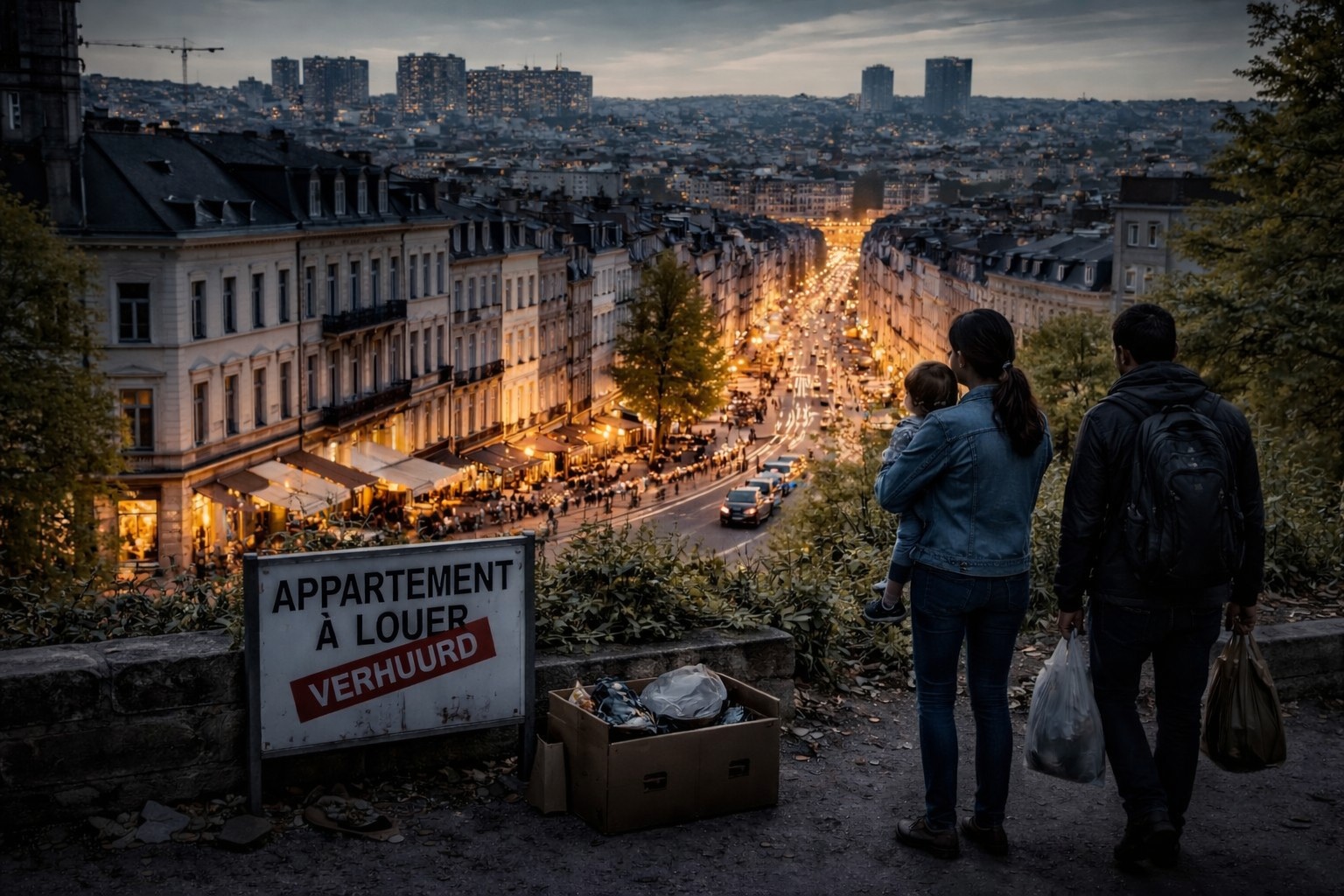
Across Europe, rents have outrun wages. Homes are treated as investments, tourist pressure remakes neighbourhoods, and more people can still work in the city than afford to live in it.
Across Europe, the housing problem no longer feels temporary. It has settled into ordinary life. You see it when a room costs what a small flat used to cost. You see it when leaving home is postponed again, when moving closer to work is no longer realistic, when the same income buys less space, less calm, less future than it did a few years ago. Across Europe, housing is no longer just a difficult expense. It is becoming the line that separates those who can remain in the city from those who are slowly pushed out.
That is why the European housing crisis should not be treated as a technical inconvenience. It is not just about supply, demand or planning procedures. It is about who gets to stay, who is pushed outward, and what kind of city remains when ordinary people can still work there but cannot afford to live there. Housing in Europe – 2025 edition gives the broad picture: between 2010 and 2024, house prices in the EU rose by 53%, while rents rose by 25%.
When rent pulls away from wages
This is the crack that matters most. Wages do not move at the same speed as rent, and people feel that long before ministers discover the right vocabulary for it. Young workers stay longer in their childhood rooms. Students travel farther for a place they can barely afford. Couples remain stuck in flats that no longer fit their lives because moving would cost more than enduring. The city stays open as a place where people can work and spend money, but it grows steadily harder to inhabit for any length of time.
The housing cost overburden rate measures the share of households spending more than 40% of disposable income on housing. Once that threshold stops sounding exceptional, insecurity stops being an accident and starts looking built in. People are not only paying more for a roof. They are paying with time, mobility, privacy, health and the ability to make plans that last longer than the next lease.
Tourist pressure changes neighbourhoods faster than politics admits
Short-term rentals are not the whole story, but pretending they do not matter has become absurd. In many European cities, a home can now yield more as a weekend product than as a place to live. Once that logic spreads through a neighbourhood, the change is easy to recognise. Long-term tenants leave. Everyday shops thin out. The district becomes easier to visit and harder to inhabit. The city starts arranging itself around circulation rather than permanence.
The EU has already admitted that this is no longer a side issue. Its framework on online short-term accommodation rental services exists because public authorities need reliable data on a sector that now affects affordability in a serious way. The European Affordable Housing Plan goes further and explicitly points to pressure from short-term rentals in areas under housing stress. That matters because it says, in official language, what residents have been saying for years: homes have been turned into yield machines, and neighbourhoods are paying the price.
The burden does not fall evenly
The people pushed out first are usually the same people a city still depends on every day. Students. Nurses. Waiters. Delivery workers. Teachers at the start of their careers. Young families without inherited security. Migrants. Service staff. People whose lives are already thin on margin for error. These are the people asked to keep urban life running while being told, in practice, that they no longer quite belong inside it.
That is what makes this crisis political. The city still wants their labour. It still needs their time. It simply becomes less willing to make room for their lives. A city that works like this is not only unequal. It is selective. It does not expel everyone, only those without property, without leverage and without enough protection to absorb permanent instability.
The myth of inevitability protects the system
The most useful story for those who benefit from the current arrangement is also the most dishonest one. Prices rise because that is what markets do. Neighbourhoods change because cities evolve. Nothing can really be done except adapt. This language makes everything sound natural, almost meteorological. It is not.
Housing systems are shaped by rules, incentives and choices. Weak public housing. Loose regulation. Tax regimes that reward rent extraction. Political caution whenever property interests feel threatened. The European Affordable Housing Plan matters precisely because it acknowledges that affordability is no longer a fringe issue. It also shows how far things have been allowed to drift. The tools are not mysterious. What remains scarce is political will.
What politics could do, if it chose to act
There is no miracle fix, and anyone who promises one is selling theatre. Still, the field is not empty. Better transparency in the rental market would make abuse harder to hide. Serious limits in high-pressure areas would slow the conversion of homes into tourist infrastructure. Public and social housing, treated as part of democratic life rather than as a relic from another century, would take some pressure off the private market.
None of this solves everything. But that is not the point. The point is that many of the remedies already exist in outline, in law, in public debate, in institutional proposals. What is often missing is not information. It is the willingness to act before another part of ordinary urban life is priced into disappearance.
Why this is a democratic issue
Housing is often filed away under urban policy, municipal competence or household economics. That frame is too narrow. If people cannot afford to remain where they work, study, care, create or age, then formal rights begin to lose part of their substance. A freedom that cannot secure a place to live becomes thin very quickly.
That is why the European housing crisis is also a democratic issue. A city that filters its residents through price is deciding who may remain visible and who must move outward. It is deciding whose exhaustion is acceptable, whose commuting time does not count, whose future can be suspended for another year. That process does not produce only inequality. It produces silence.
A city that cannot house its residents is feeding on its own future
The worst thing about this crisis is that it is rarely spectacular. It is ordinary. It arrives monthly. It wears people down quietly. It tells someone not to move out yet, not to have a child yet, not to leave a bad job yet, not to study there after all, not to stay. It often does not look like catastrophe. It looks like a smaller life.
That is why the point should be said plainly. Across Europe, rent has become one of the main ways inequality takes material form. It enters everyday life through the door of the flat. It tells people whether they are expected to remain or disappear. A city that cannot house the people who keep it running is not successful. It is feeding on its own future.

Samuel Pes
Amo la storia e la geopolitica perché mi piace capire cosa muove le persone, i Paesi e le scelte che cambiano il mondo. Scrivo di attualità internazionale e analisi geopolitica con l’obiettivo di dare contesto, collegare i fatti e rendere più chiari i processi che stanno dietro le notizie. Sono cresciuto tra cinema, letteratura e musica, con una predilezione per il punk rock: energia, idee nette, zero decorazioni inutili. Scrivere è il mio modo di trasformare curiosità e ricerca in lettura utile, accessibile e onesta.


Potrebbe interessarti anche

Il Punto di Vista: dare voce a chi voce non ce l’ha

Gaza: The Habit of Catastrophe